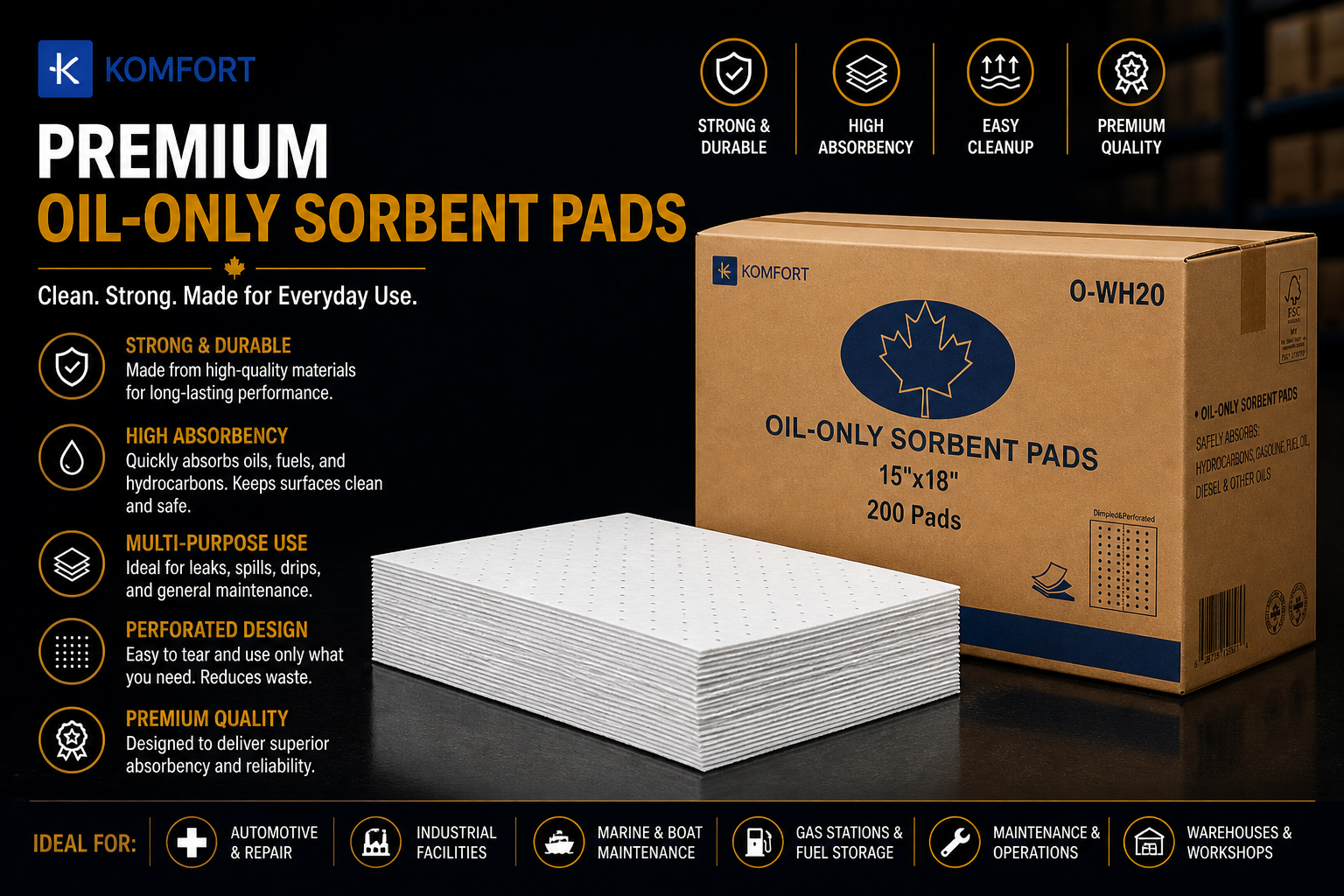
Oil-only sorbent pads in white absorb hydrocarbons (oil, fuel, hydraulic fluid) while repelling water — making them the essential pad for marine spill response, parking lot drip control, outdoor oil-handling environments, and any application where you need to absorb oil without picking up water. Available in two case sizes: <strong>O-WH-10</strong> (100 pads per case) for routine use and <strong>O-WH-20</strong> (200 pads per case) for higher-volume operations.
Why Oil-Only? Because Water Matters
The unique property of oil-only sorbent is hydrophobic — it repels water entirely. Drop one in a puddle of water and it floats. Drop one in oil floating on water, and it absorbs only the oil while remaining floating on the water beneath. This is critical for: marine spill response (oil on harbor water), parking lot drip control (rain washing away water but oil stays), and outdoor industrial sites where weather mixes everything up. Universal pads absorb both water and oil — useless when you only want to remove oil.
O-WH-10 vs O-WH-20 — Sizing Your Order
The two case options are about volume, not performance. O-WH-10 contains 100 pads — perfect for routine drip pan replacement, occasional spill response, and small-to-mid facilities. O-WH-20 contains 200 pads — better unit pricing for higher-volume operations, larger industrial sites, or facilities maintaining substantial spill kit reserves. Both pads are identical 15" × 18" oil-only sorbent.
Where Oil-Only Earns Its Place
For 90% of industrial drip and spill response, universal gray is the right choice. But oil-only white is irreplaceable in specific scenarios: marine (port, shipyard, fishing) where oil-on-water response is the primary use case. Outdoor automotive shops where rain mixes with parking lot drips. Trucking yards where rain-washed oil residue needs cleanup without absorbing rainwater. Stormwater management where oil-water separation is regulated. If you operate near water or outdoors, you need oil-only in your spill kit.
Compliance & Stocking
Marine spill response in Canadian waters is regulated under federal law — facilities along coasts and inland waterways must maintain oil-only spill kits sized to their risk profile. Industrial sites with outdoor fluid handling face provincial environmental regulations requiring similar capacity. Both case sizes (O-WH-10 and O-WH-20) qualify as compliant spill kit components when combined with appropriate boom and absorbent supplies.
Frequently Asked Questions
What does 'oil-only' actually mean?
The pad material is hydrophobic — it repels water and only absorbs hydrocarbons (oil, fuel, hydraulic fluid, lubricants). Drop one in water, it floats and stays dry. Drop one on oil floating on water, it absorbs only the oil. This is the opposite of universal pads, which absorb everything.
When would I use oil-only instead of universal?
Whenever water is present or possible. Outdoor environments (rain), marine settings (oil on water), parking lots, stormwater management, and any application where you need to absorb only oil without picking up water. For indoor industrial spill response with mixed fluid types, universal gray is usually the better stock.
What's the difference between O-WH-10 and O-WH-20?
Same pad — different case quantities. O-WH-10 contains 100 pads. O-WH-20 contains 200 pads at better unit pricing. Higher volume order = better per-pad cost. Pick based on how much you'll use; the pads themselves are identical.
Are these required for marine spill response?
In Canadian waters, facilities along coasts and inland waterways must maintain oil-only spill kits sized to their risk profile. Federal Transport Canada regulations and provincial environmental regulations both require oil-only sorbent capacity for facilities handling fuel or oil near water. Universal pads don't qualify because they absorb water.
Will they absorb diesel and gasoline?
Yes — oil-only sorbent pads absorb diesel, gasoline, motor oil, hydraulic fluid, kerosene, and most petroleum-based fluids. They're specifically engineered for hydrocarbon absorption.
How do I dispose of used oil-only pads?
Used pads contain absorbed hydrocarbons and must be treated as hazardous waste. Disposal protocols vary by province — check with your facility's environmental compliance team. Never put oil-saturated pads in regular trash; they're a fire hazard and environmental violation.