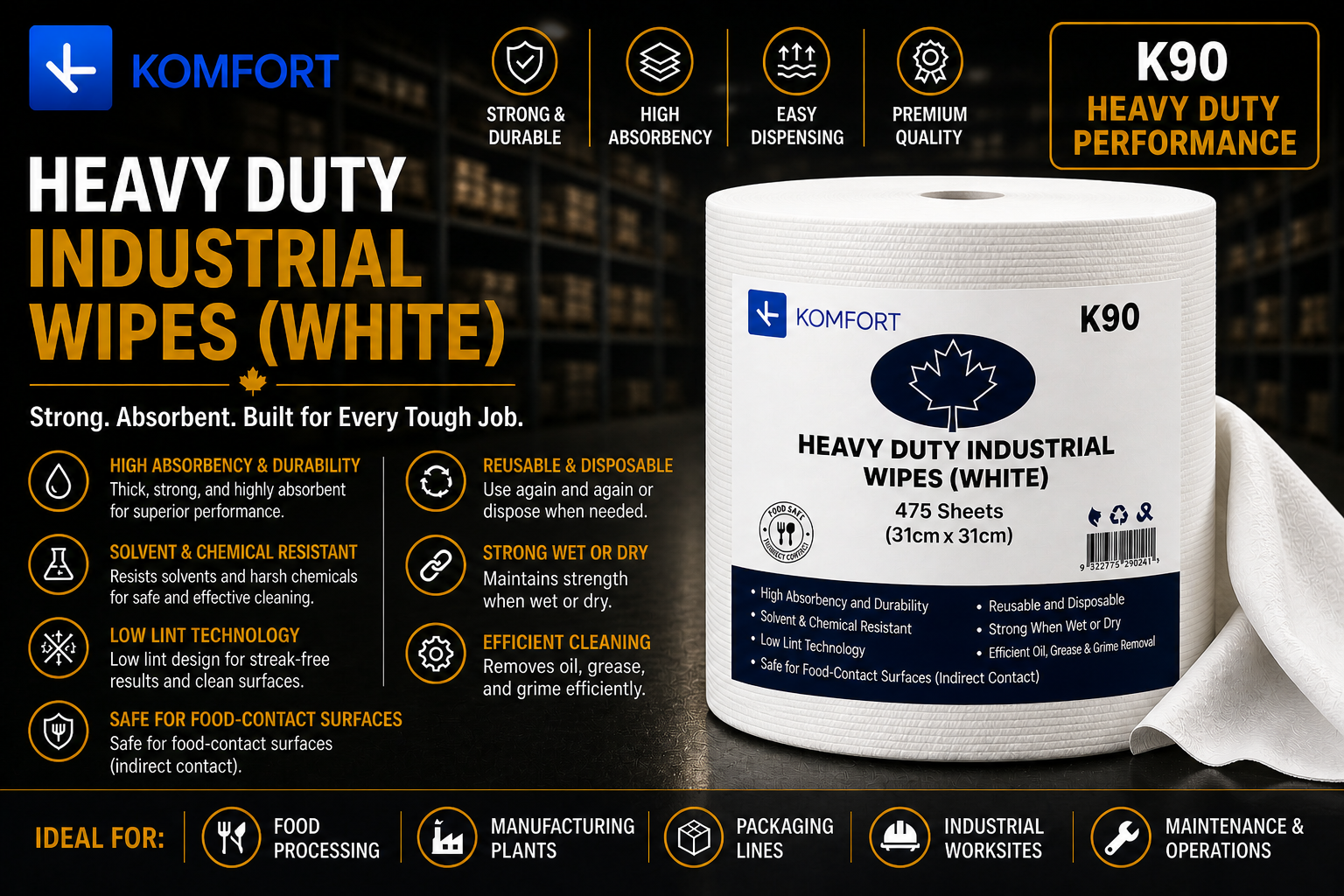
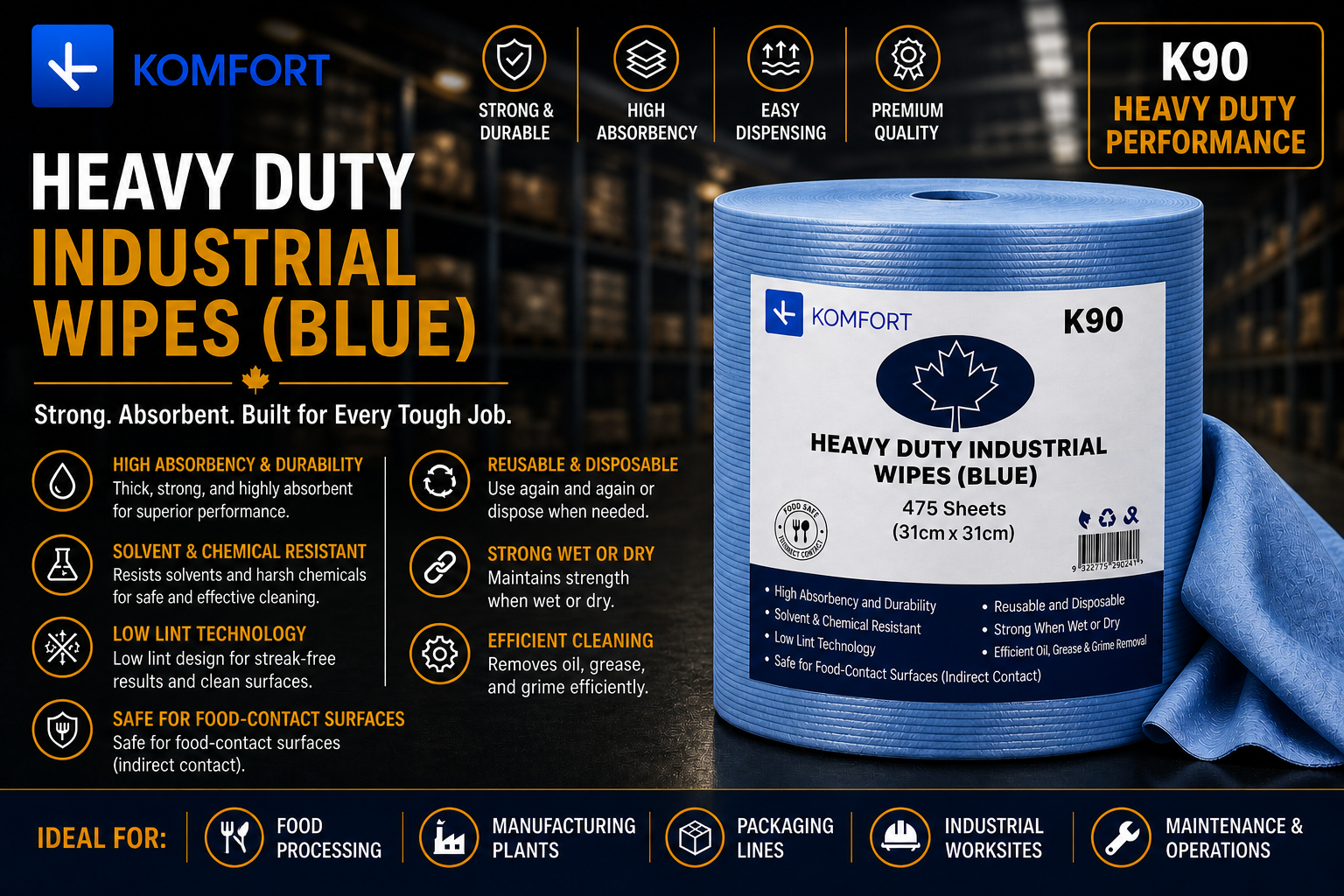
K90 Heavy Duty Industrial Wipes in white are the cleanroom-friendly version of our flagship industrial wipe — performance comparable to <strong>WypAll X80</strong> at significantly lower cost, in a white color preferred for food production, pharmaceutical manufacturing, and lint-sensitive applications. Same wholesale pricing as the blue version. White is the universal indicator of cleanroom and food-contact friendly work in Canadian industries.
Like WypAll X80 — In White
If your operation needs heavy-duty wipe performance but white color, K90 White is the answer. Same engineering as our K90 Plus blue: high-strength fiber bonding, low-lint shedding, excellent absorbency. Comparable to WypAll X80 in performance, significantly cheaper in cost. The choice between K90 Plus (blue) and K90 (white) is purely about color preference for your industry.
Why White Wipes
White is the standard color for food production cleanrooms, pharmaceutical manufacturing, and lint-sensitive applications like glass cleaning, optical work, or surface preparation. White wipes signal 'clean work' visually — they're not for greasy mechanical jobs. In food production specifically, white is often required in ready-to-eat zones, allergen-controlled areas, and direct food-contact surface cleaning.
Low-Lint Performance Matters
The defining feature of K90 (and WypAll X80) is the low-lint design. Cheap white wipes shed fibers everywhere — terrible for surface preparation, painting prep, optical cleaning, or food-contact surface sanitation. K90's fiber bonding holds the wipe together so it cleans without leaving particles behind. This is why labs, cleanrooms, and food plants pay extra for engineered wipes instead of using paper towels.
For Cleanroom, Food, and Sensitive Work
Same wipe, multiple critical applications. Pharmaceutical cleanrooms use them for equipment wipe-downs that can't tolerate lint contamination. Food production sanitation crews use them in ready-to-eat zones where blue wipes would visually contaminate (everything in those zones is white). Surface prep crews — auto body shops, industrial painting — use them for solvent wipe-downs before coating. Each industry needs the same engineered low-lint performance.
Frequently Asked Questions
What's the difference between K90 Plus (blue) and K90 (white)?
Same heavy-duty wipe, same wholesale price, same performance comparable to WypAll X80 — only the color differs. Blue is preferred for automotive, industrial, and food production maintenance work (visibility, industry standard). White is preferred for cleanrooms, pharmaceutical work, food-contact surface cleaning, and lint-sensitive applications.
Are these low-lint?
Yes — that's the key engineering feature. The fiber bonding holds the wipe together during use so it cleans without shedding particles. This is critical for cleanroom, food-contact, and surface-preparation applications where lint contamination causes real problems.
How does the price compare to WypAll X80?
K90 White is significantly cheaper per case than WypAll X80 with comparable performance. We don't publish exact comparisons because WypAll pricing varies by distributor, but the savings are substantial. Most customers who switch from WypAll see 30-40% cost reduction with no performance compromise.
Are they reusable?
Yes — wring out, rinse, or shake clean and reuse for the same application. Heavy work might use one wipe per task; lighter work might extend across multiple. Never reuse across cleaning zones (e.g., from one production area to another) for HACCP reasons.
Are these food-contact safe?
Yes for food-contact surface cleaning — that's a primary use case. Not intended as direct food-contact wipes (i.e., wiping food itself). Used to clean equipment surfaces, prep tables, and packaging machinery before food contact resumes.
How many sheets per case?
Approximately 600 sheets per case. Sheets measure roughly 12 × 13 inches and come in a dispenser-friendly format.