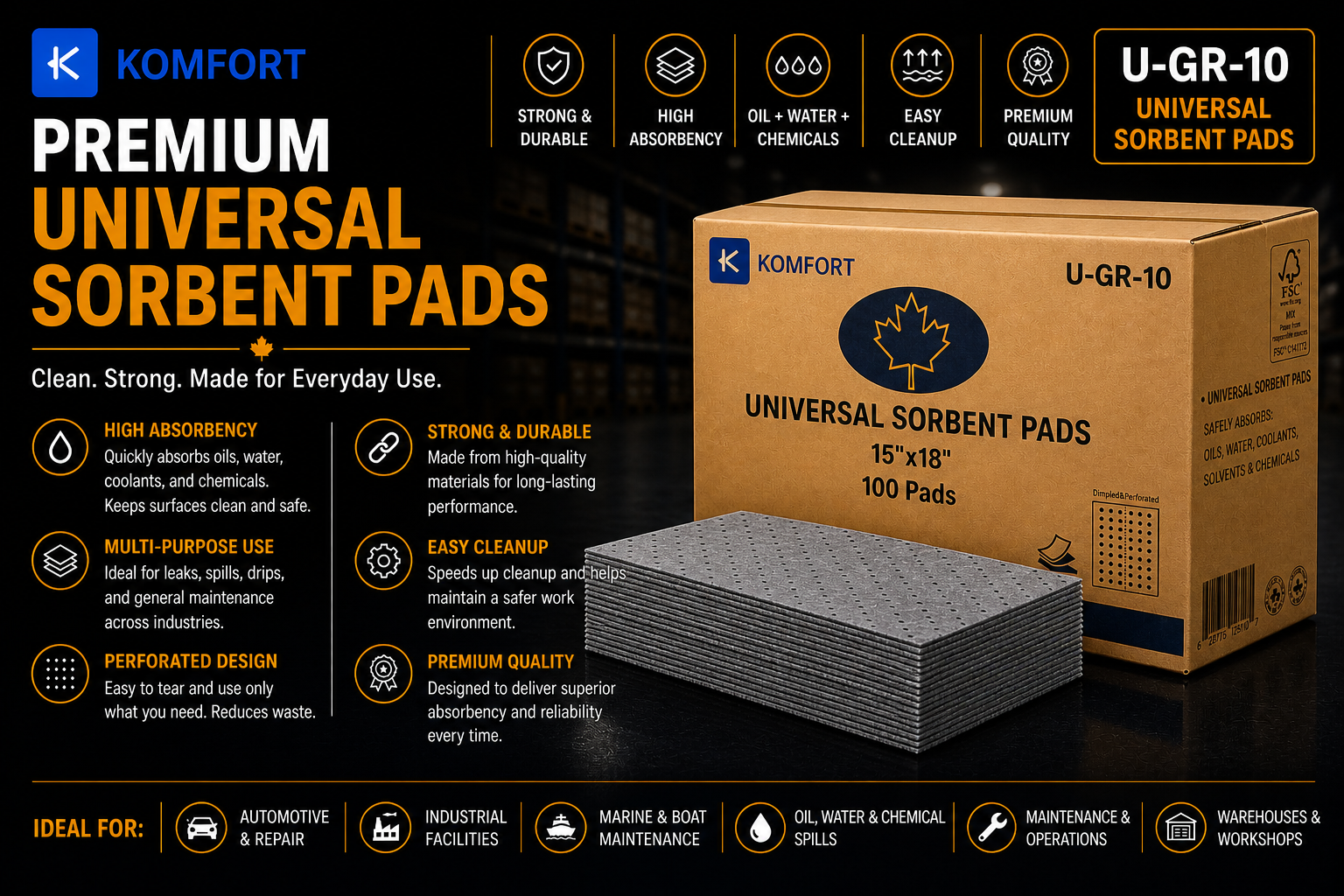
Universal sorbent pads in gray (model U-GR-10) are heavy-duty, all-fluid absorbers designed for industrial spill response and routine drip control. Each pad measures 15" × 18" and the case contains 100 pads. Universal means they absorb water, oil, coolant, solvents, and chemical spills — making them the right stock for facilities that don't know exactly what they'll encounter when something leaks.
Universal vs Oil-Only — Which Do You Need?
Sorbent pads come in two main types: universal (gray) absorb everything — water, oil, coolant, solvents, chemical spills. Oil-only (white) absorb hydrocarbons but repel water — critical for marine spill response, parking lot drip pans, and outdoor oil-handling. If your facility sees a mix of fluid types, gray universal is the smart stock. If you specifically deal with oil contamination near water sources, oil-only white is essential.
Why Heavy-Duty Matters
The U-GR-10 model is the heavy-duty grade — thicker, more absorbent, more durable than light-duty alternatives. Heavy-duty pads handle industrial spills (5-gallon coolant leaks, hydraulic fluid releases, processing line drips) without falling apart mid-cleanup. Light-duty pads soak through and tear, leaving residue and requiring you to use 2-3x more material. The cost-per-cleanup math strongly favors heavy-duty.
15 × 18 Inch — The Industrial Standard
This is the standard industrial pad size — large enough to handle real spills, small enough to layer for big cleanups, and consistent with rack-style storage and dispenser systems. You can place a pad under a known drip point as long-term containment, deploy multiples for spill response, or stage them on machinery as preventive measures during maintenance.
Stocking for Compliance
OSHA and Canadian environmental regulations require facilities handling fluids to maintain spill kits — and sorbent pads are typically the largest component. A standard spill kit for industrial facilities includes 30-50 pads minimum, plus boom and granular absorbents. Many facilities maintain 2-3 cases (200-300 pads) on-site for routine drip control plus emergency response capacity.
Frequently Asked Questions
What does 'universal' actually absorb?
Universal sorbent pads absorb water-based fluids (water, coolant, water-based chemicals), oil-based fluids (motor oil, hydraulic fluid, transmission fluid), and most solvents and industrial chemicals. They don't repel water like oil-only pads — they absorb both. This makes them the right stock when you don't know in advance what you'll need to clean up.
What's the difference between U-GR-10 universal and our oil-only white pads?
U-GR-10 (universal gray) absorbs everything. O-WH-10 and O-WH-20 (oil-only white) absorb only hydrocarbons and repel water — so an oil-only pad floating on water will absorb oil from the surface without sinking. Universal is for general industrial spills. Oil-only is for marine spill response, outdoor drip pans, and oil-water separation work.
How many pads per case?
100 pads per case, 15" × 18" each — typical industrial sizing for heavy-duty universal sorbents.
Are they OSHA compliant for spill kits?
Yes. Universal sorbent pads are a standard component of OSHA-compliant spill kits, recognized by Canadian environmental regulators, and accepted in Workers Compensation Board safety audits. Combined with absorbent boom and granular material, they form a compliant industrial spill response setup.
Can I use them for food production spills?
Yes for non-food-contact spill response — coolant from machinery, hydraulic leaks, equipment maintenance fluids. Don't use them on direct food contact surfaces or for food-grade fluid cleanup (use food-safe absorbents for that). For general industrial fluid response in a food facility, gray universal is correct.
How do I dispose of used pads?
Disposal depends on what they absorbed. Used pads with water-based fluids can typically go in regular industrial waste. Used pads with hazardous fluids (oil, solvents, chemicals) must be disposed as hazardous waste per local regulations. Always check your facility's hazardous materials disposal protocol before tossing used sorbents.